What yesterday's Shopify outage actually broke - and why headless D2C storefronts kept their browsing pages live while theme stores went dark.
Shopify hiccupped yesterday. Across feeds, the same advice circulated: pause your campaigns, your store isn't functioning properly, you're burning ad spend on a frozen site. It's good advice. It's also a symptom of an architectural choice most D2C brands didn't know they were making.
Some storefronts stayed up. Most didn't. The difference wasn't luck. It was the frontend.
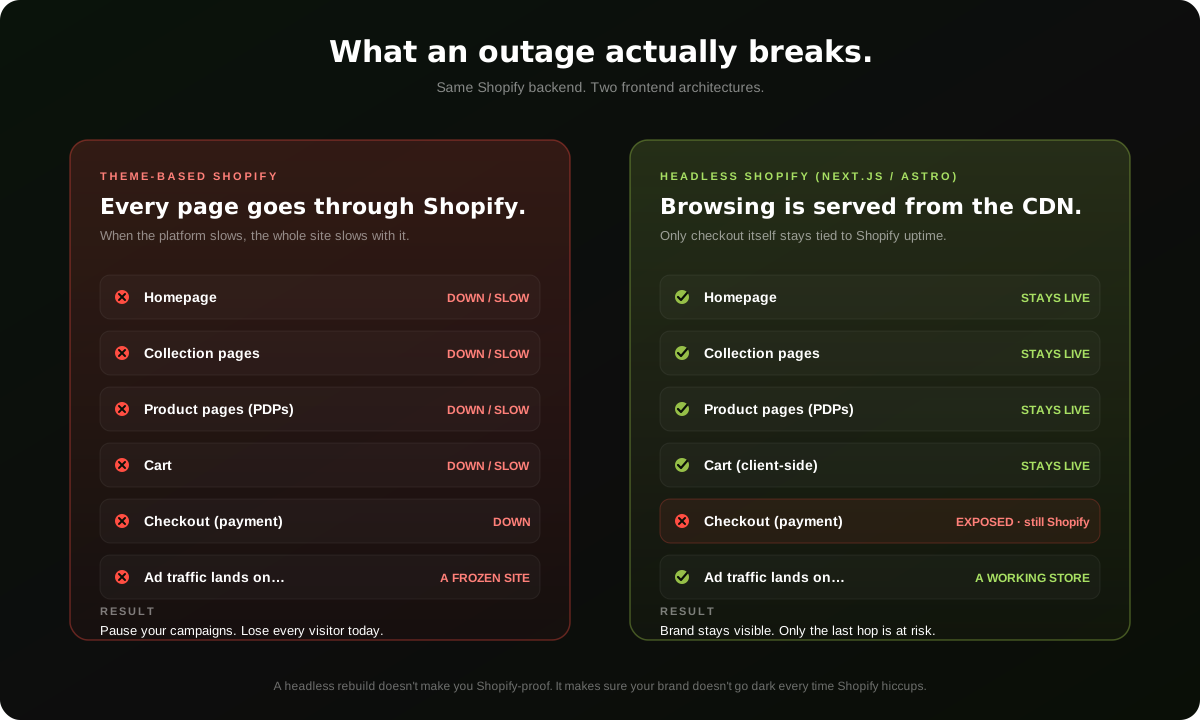
Why every page on a theme store goes down with Shopify
On a standard Shopify theme, every visit to your homepage, collection, or PDP is rendered by Shopify on demand. The HTML you serve is generated request-by-request from Liquid templates running on Shopify's infrastructure. When that infrastructure degrades, so does your store. Pages slow down. Theme assets fail to load. Apps that depend on Liquid hooks misbehave. Visitors who clicked your ad see a frozen brand.
The advice to "pause your campaigns" exists because, on a theme store, there's nothing else you can do during an outage. Your frontend has no independent life.
Why a headless storefront mostly stays up
A headless build flips that dependency. Your storefront is a separate application - built in Next.js, Astro, or similar - that fetches product data from Shopify, pre-renders pages, and serves them from a CDN. Most of your site doesn't hit Shopify on the user's request at all.
During an outage, that means:
- Homepage, collection pages, PDPs, content pages keep loading - they're cached HTML on a CDN, not Shopify-rendered.
- Navigation, search, filters keep working - they're part of your independent storefront.
- Cart state lives client-side in the browser. It survives Shopify being slow.
- Ad traffic lands on a working brand experience, not a stalled site.
The honest caveat: checkout is still Shopify
Headless isn't a magic shield. When the customer hits Buy, they're routed into Shopify's checkout - and that part still depends on Shopify being up. A full outage that affects checkout will still cost you sales.
But the failure mode is dramatically different. On a theme store every page is rendered by Shopify at the moment of the request, so when Shopify degrades there is no page for the visitor to land on - the ad is paid for and the click arrives at nothing. On a headless storefront those pages were built ahead of time and are served from a CDN, so the products, the brand, the story and the bundles are all still there. The cart is there too, sitting in the browser, waiting for checkout to come back. The only step that still needs Shopify up is checkout - and that is where the blast radius stops.
On a theme store, an outage hides your brand. On a headless storefront, it only delays the order.
What this looks like in practice
We rebuilt vasansi.com to vasansi.net on a headless Next.js storefront - same Shopify backend, completely new frontend. The initial HTML went from 385,680 bytes to 3,084 - both hosts fetched with curl on 18 August 2026, both still live if you want to check. And outages that take theme stores offline don't take the brand dark - collections, PDPs, and content keep serving from CDN. See the Vasansi case study for what changed.
For COD-heavy Indian D2C - where the customer pays at the door and often converts hours or days after their first visit - "site stayed live" is the actual moat. A customer who browses today and converts tomorrow doesn't care if checkout was slow for 90 minutes this afternoon. A customer who never saw your homepage will never come back.
What to actually do - today and longer-term
Today (theme store, in an outage)
- Pause performance-marketing spend until Shopify status is green.
- If you must run campaigns, route ads to landing pages hosted outside Shopify (a static Vercel/Netlify page) that captures email and re-engages the visitor once the store is back.
- Email any abandoned carts the moment Shopify recovers - outage-stranded customers often convert quickly once they can.
Longer-term
Audit how much of your business depends on Shopify rendering your frontend live. If your ad budget is in lakhs or crores per month, every hour Shopify hiccups is a measurable line on your P&L. Put your own hourly ad spend next to the outage minutes in Shopify's status history for the last year. That sum is the cost of the current architecture, in rupees, and it is the only version worth trusting - both numbers are yours. We do not have them. Neither does anyone quoting you a payback period.
Want to know what a headless rebuild would actually change for your store? Run a free 30-second audit - we'll send back a quick PDF.
Get my free auditBottom line
Shopify will hiccup again - every platform does. The question isn't whether to be on Shopify (it's still the right backend for most D2C). The question is whether your frontend should fall down every time the backend has a bad afternoon. A headless build is the cleanest way we know to say no.
Frequently asked
Does a headless storefront make me immune to Shopify outages?
No. Checkout still routes through Shopify, so payment-affecting outages will still cost you sales. The benefit is that browsing, collection pages, PDPs, content, and the brand experience all stay live - so the failure mode shrinks from "there is no page to land on" to "checkout is the one step still waiting on Shopify." For COD-heavy D2C where customers often convert hours or days after first visit, that difference is huge.
Why does a theme store go down with Shopify when an outage hits?
On Shopify themes, every page request is rendered server-side by Shopify on demand. When Shopify's infrastructure degrades, the HTML your visitor receives is degraded with it - pages slow down, theme assets fail to load, and apps that rely on Liquid hooks misbehave. There's no independent layer to keep your frontend up.
Is rebuilding to headless worth it just for outage resilience?
Outage resilience is rarely the deciding factor on its own - it's usually the closer. The everyday case is weight (our own rebuild went from 385,680 bytes of HTML to 3,084 - curl, 18 August 2026), design freedom, AI-search citability, and conversion lift. Resilience during outages is the bonus that pays for itself the first time Shopify has a bad afternoon.
What should I do right now during an outage if I'm on Shopify themes?
Pause performance-marketing spend until Shopify status is green again. If you must keep campaigns live, route ads to a static landing page hosted outside Shopify (Vercel/Netlify) that captures email and re-engages the visitor when the store is back. Email any abandoned carts the moment Shopify recovers - many of those customers convert quickly once they can.